Long before the first maps were drawn of this coastline, the whales were here. And so were the Kwakwaka’wakw.
These waters between northern Vancouver Island and the Great Bear Rainforest hold stories that stretch back to the beginning of time. The humpback whales that surface in great plumes of mist along the Broughton Archipelago are not strangers passing through. They are relatives returning home. The orcas that cut through the channels with purpose and precision are recognized not as specimens to be catalogued, but as nations unto themselves; families with histories, territories, and protocols of their own.
When you travel with Sea Wolf Adventures, the journey across these waters is not simply transit between departure point and destination. It is the experience itself.
Reading the Water the Way Our Ancestors Did
A Kwakwaka’wakw guide reads the ocean the way you might read a familiar face. The ripple pattern near a kelp bed tells one story. The behaviour of gulls circling a current line tells another. The sudden stillness of the surface before a humpback rises from below tells yet another.
This is Indigenous marine knowledge passed down for millennia; not from textbooks, but from countless generations of people whose lives depended on understanding every mood and movement of these waters. Our guides carry this knowledge in their bones. When they point to a disturbance on the surface and say a whale is about to breach, they are drawing on an understanding of animal behaviour that has been refined since time immemorial.
For European travellers accustomed to wildlife experiences framed by field guides and scientific nomenclature, this represents something profoundly different. Here, the whale is not reduced to a species name and a set of measurements. The whale is understood as a being with intention, personality, and a place within the web of relationships that holds this territory together.
Humpback Whales: The Great Return
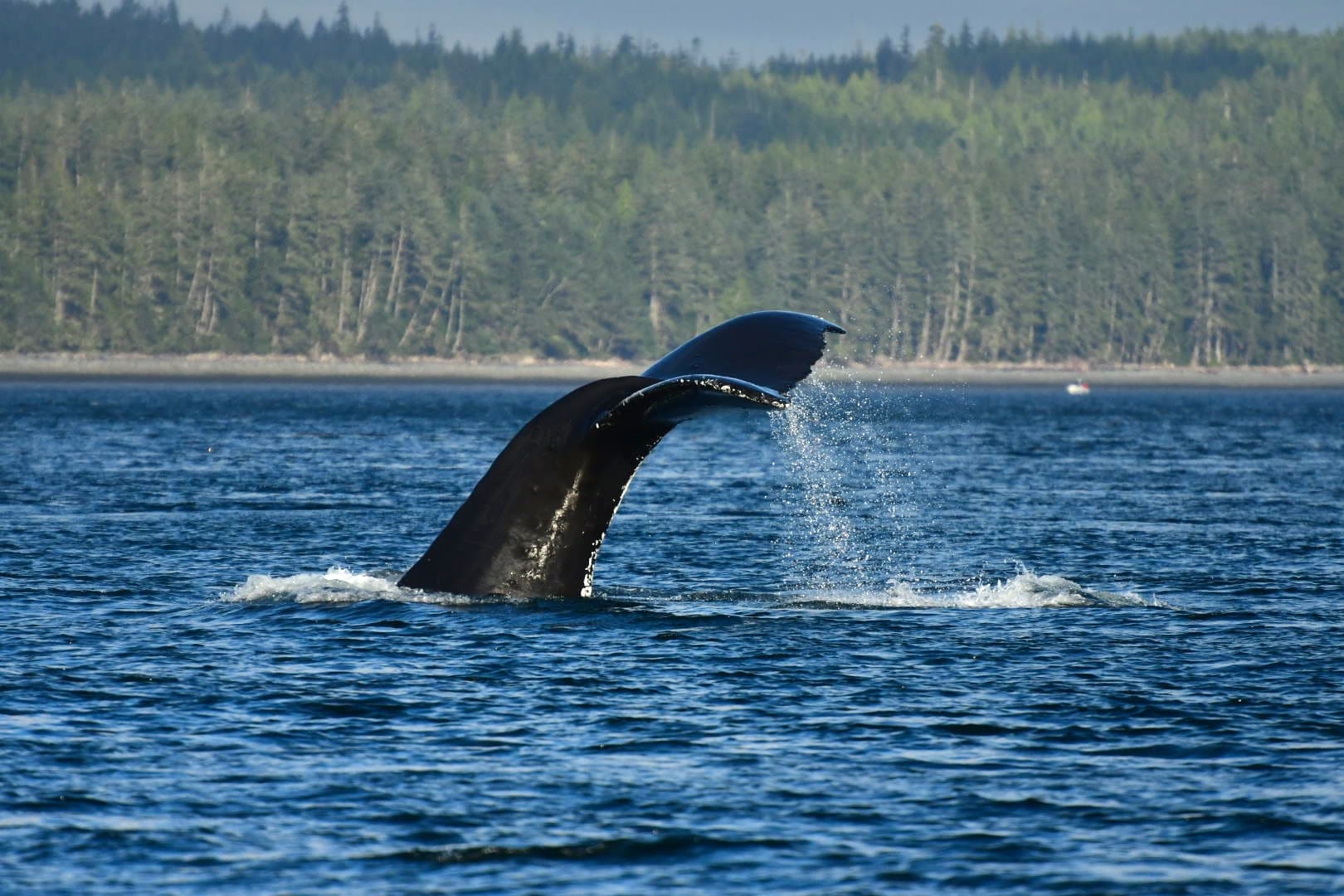
There is a story unfolding along the British Columbia coast that carries deep significance. The humpback whales are returning in numbers that honour the old memories.
For the Kwakwaka’wakw, humpback whales have always held a place of importance. Their songs travel through the deep channels of the Broughton Archipelago and echo off the walls of the inlets. Their breaches send spray into the air like offerings to the sky. Their presence signals abundance; where humpbacks feed, the ecosystem is thriving.
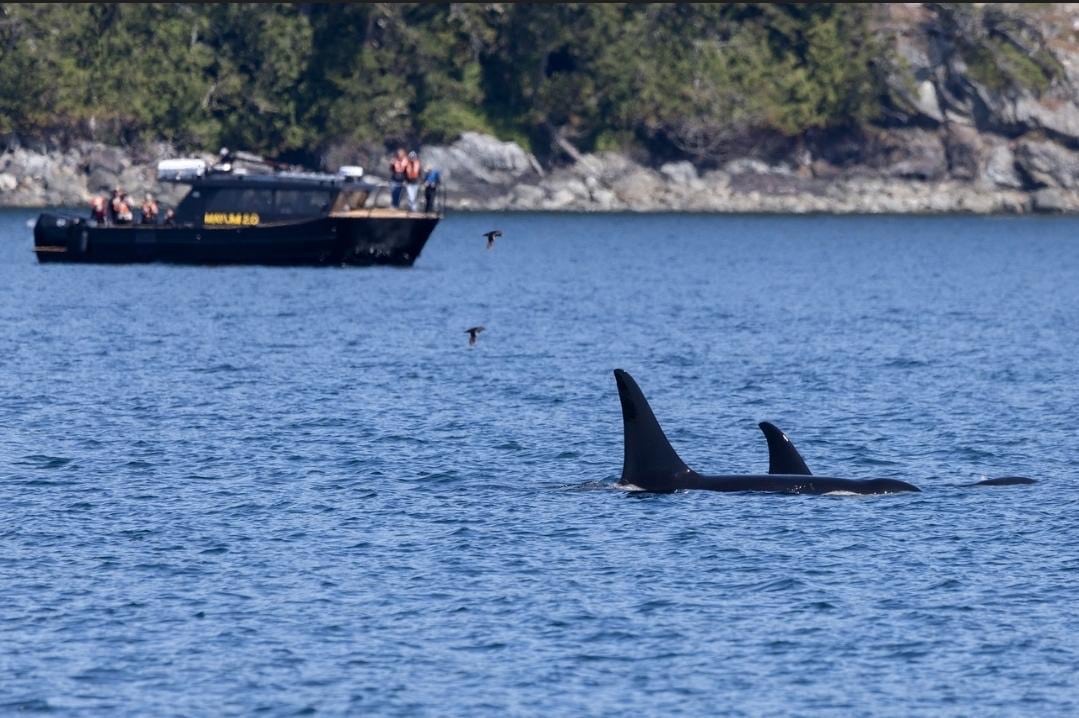
Travelling through these waters during the season of abundance, guests aboard Sea Wolf vessels witness humpback behaviour that ranges from the spectacular to the quietly intimate. A whale may breach fully out of the water, its enormous body twisting in the air before crashing back into the sea with a sound that reverberates through your chest. Or a mother and calf may surface gently beside the boat, exhaling in synchronized rhythm, close enough that you can feel the warmth of their breath on the cool marine air.
Our guides do not chase these moments. They read the water, position the vessel with respect, and allow the whales to choose the terms of the encounter. This is not passive observation. It is an active practice of restraint and reverence that reflects how the Kwakwaka’wakw have always related to the beings who share this territory.
Orca Nations: Families on the Water
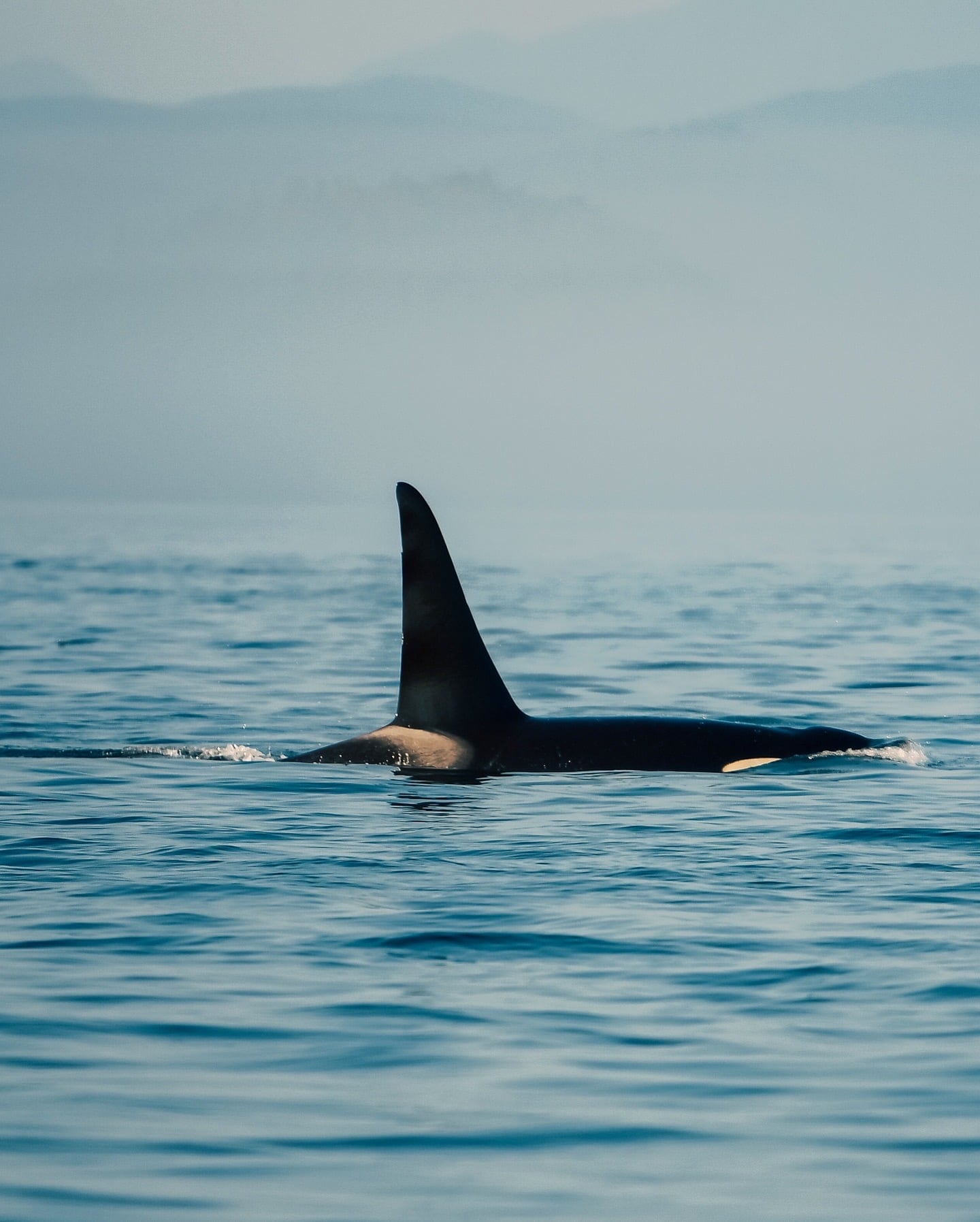
The orcas of these northern waters travel in family groups that mirror, in many ways, the clan structures of the Kwakwaka’wakw. They are matrilineal. The eldest female leads. Knowledge of feeding grounds, travel routes, and seasonal patterns passes from grandmother to mother to calf across generations.
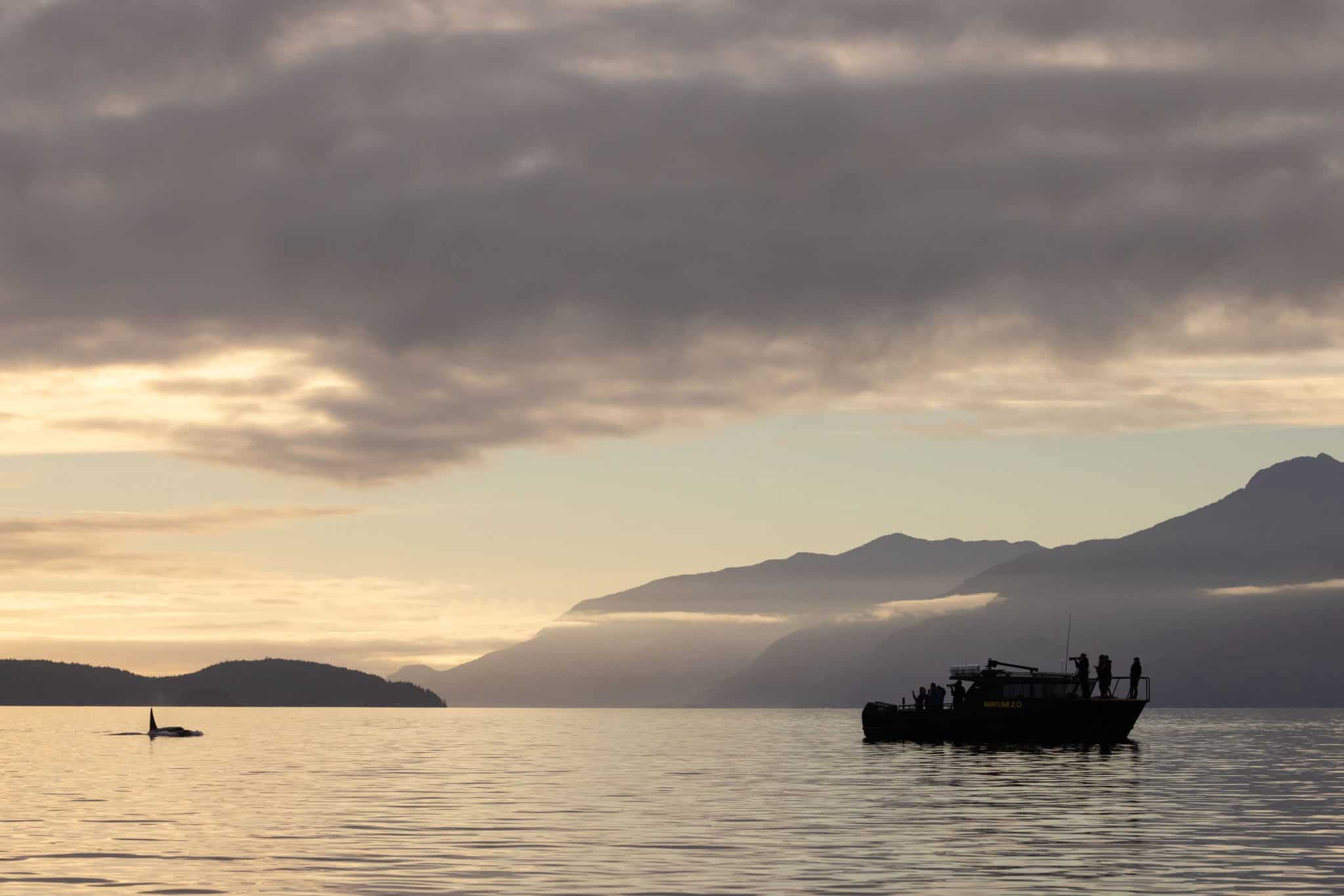
For the Kwakwaka’wakw, the orca holds a place of particular power and significance. The orca appears on crests, in ceremony, and in the stories that explain how the world came to be ordered. To encounter orcas on the water is not a sighting to be checked off a list. It is a meeting between nations.
The waters around the Broughton Archipelago and the passages leading into the Great Bear Rainforest serve as travel corridors for multiple orca communities. Residents who feed on salmon follow the runs through these channels. Transients who hunt marine mammals patrol the coastlines and rocky islets. Each group carries its own dialect, its own culture, its own way of being in the world.
When our guides identify an approaching pod, they share not just what they see but what they know. Which family this is. How they have been moving through the territory this season. What their presence here, at this time, might tell us about the health of the salmon runs and the broader ecosystem. This layered understanding transforms a whale watching excursion into something far richer; an education in ecological relationships delivered by people whose families have been part of those relationships since time immemorial.
The Boat Journey as Ceremony
In many Indigenous cultures along this coast, the canoe journey itself carries spiritual and cultural weight. The act of travelling across water is not merely practical. It is relational. You are asking the water to carry you. You are entering the territory of beings who were here long before you arrived.
Sea Wolf Adventures carries this understanding into every voyage. The journey from port into the remote waters of the Great Bear Rainforest passes through landscapes of staggering beauty: forested islands rising from silver water, mist clinging to mountain ridges, eagles circling above ancient stands of cedar and hemlock. But what makes this journey distinct from any other coastal boat tour is the perspective through which it is experienced.
Our Indigenous guides narrate the landscape not as scenery but as home. That point of land is where a certain family has harvested for generations. That bay is where the herring return each spring, drawing seals, sea lions, humpbacks, and orcas into a concentrated celebration of abundance. That stretch of coastline holds stories that are shared only with those who travel here with respect.
This is what conscious whale tourism looks like in practice. It is not about getting the closest photograph or guaranteeing a sighting. It is about entering a relationship with a place and its beings, guided by people who have maintained that relationship for millennia.
What the Whales Teach Us About Sustainable Tourism
The return of humpback whales to British Columbia’s coast carries a lesson that extends beyond marine biology. It is a story about what happens when restraint replaces exploitation. When protection replaces extraction. When we choose to be in relationship with the natural world rather than in dominion over it.
Sea Wolf Adventures operates within this ethic. Our approach to whale encounters is governed by principles that long predate modern ecotourism guidelines. We maintain respectful distances not because regulations require it, but because our cultural protocols demand it. We limit the number of guests on each voyage not for marketing exclusivity, but because smaller groups create less disturbance and allow for deeper connection.
For travellers from Europe and beyond who seek wildlife experiences that align with their values of conservation and cultural respect, this distinction matters. The difference between a whale watching tour and a whale encounter guided by Indigenous knowledge is the difference between observing nature and participating in a living relationship with it.
The Great Bear Rainforest is one of the last places on Earth where this kind of experience remains possible; where the ecosystem is intact enough, the cultural knowledge deep enough, and the commitment to sustainability genuine enough that an encounter with a humpback whale or an orca pod carries the full weight of its meaning.
Carrying the Stories Forward
Every whale encounter on these waters adds a new layer to a story that has been unfolding since the beginning of time. The Kwakwaka’wakw have always understood this. The whales are not attractions. They are teachers, relatives, and indicators of the health of the world we all share.
When you travel with Sea Wolf Adventures through the ancient waters of the Broughton Archipelago and the Great Bear Rainforest, you become part of that story. You carry it home with you. And in doing so, you help ensure that these waters, these whales, and the Indigenous knowledge that binds them together continue to thrive for the generations still to come.
The waters remember. And now, so will you.
Sea Wolf Adventures offers Indigenous entrepreneur-led whale watching and grizzly bear viewing experiences departing from northern Vancouver Island into the Great Bear Rainforest. Guided by Kwakwaka’wakw knowledge keepers, every journey is rooted in cultural respect, ecological stewardship, and deep connection to territory.