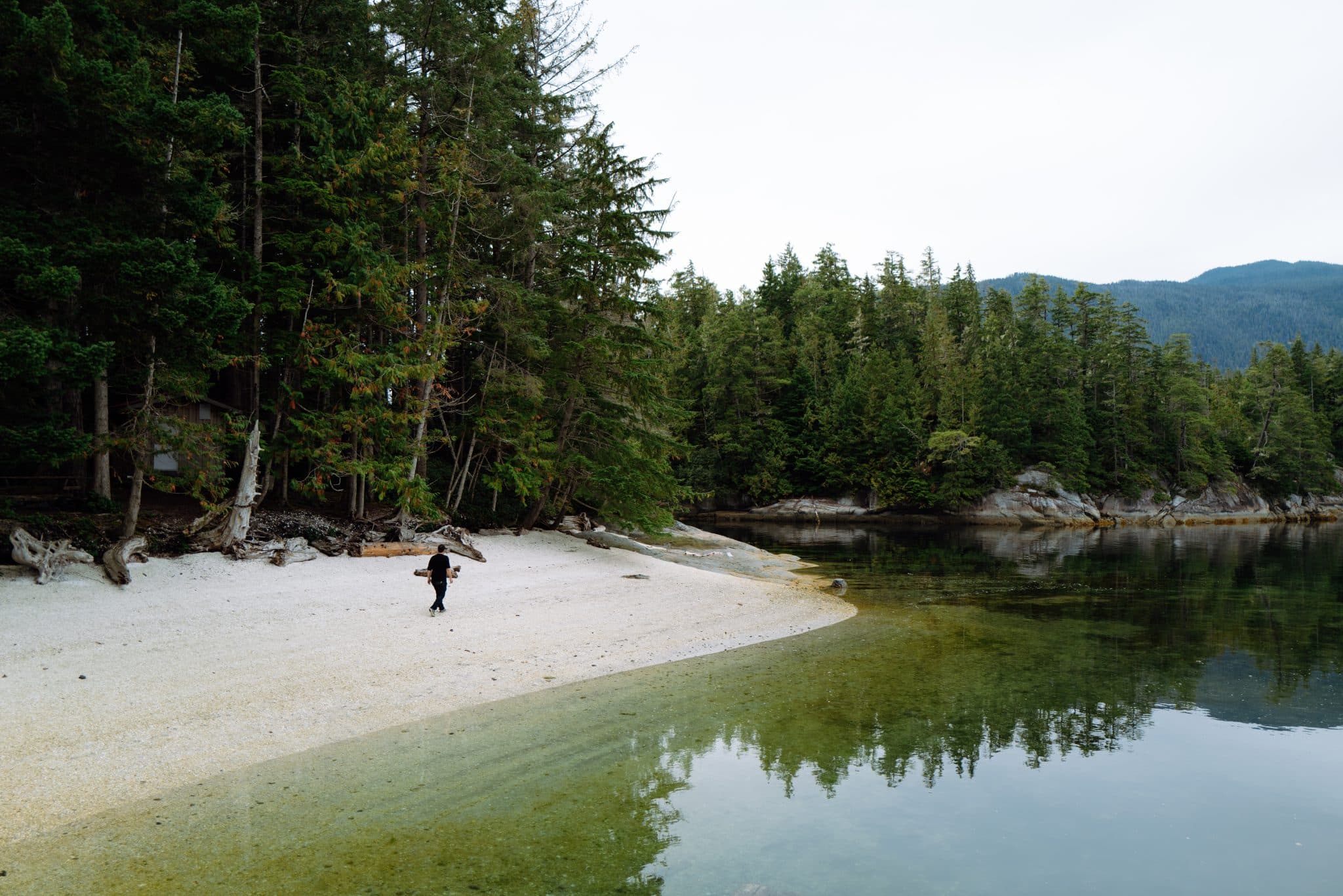
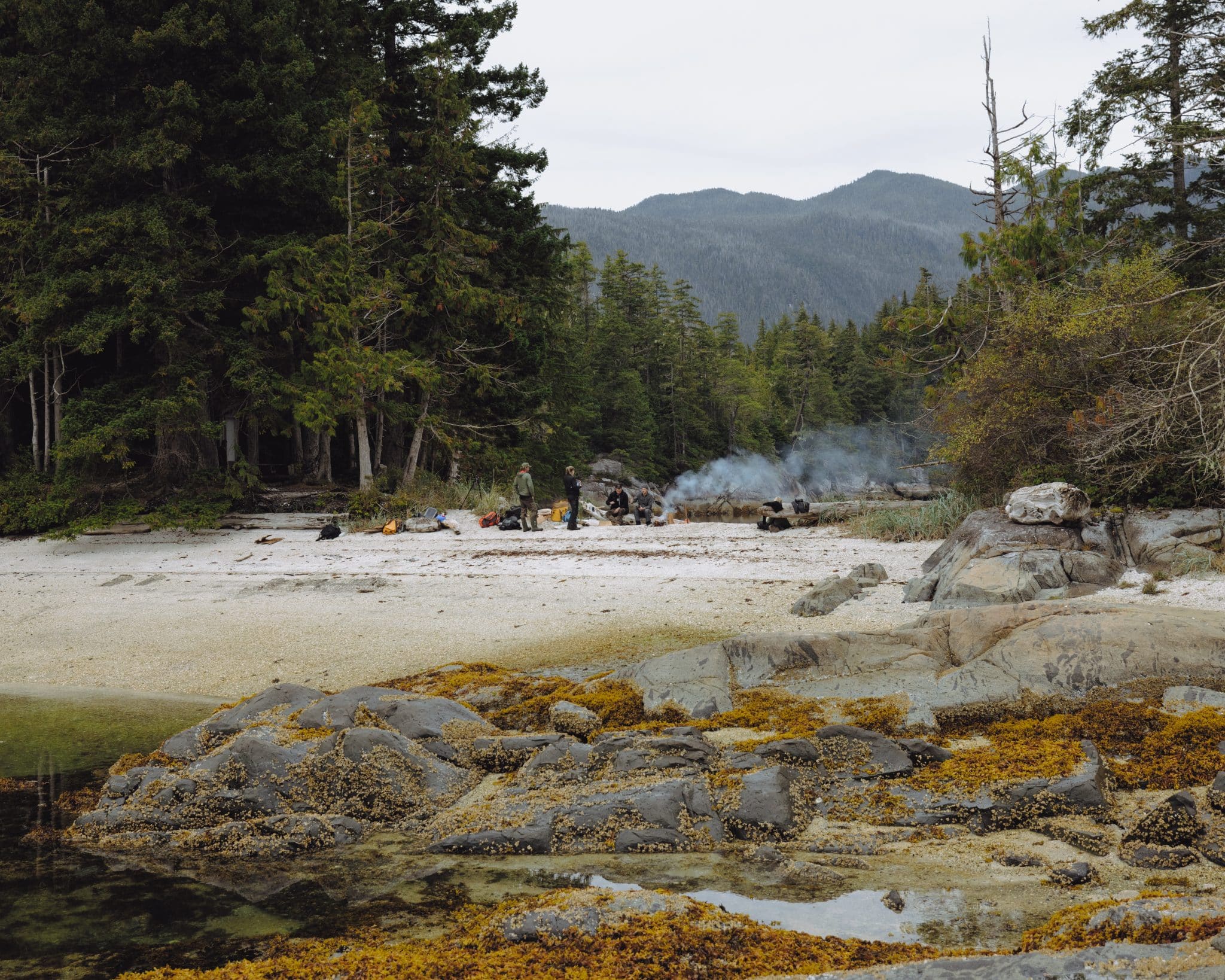
There is a story written in shells and stone, a record kept by the earth itself. When you walk the shores of Kwakwaka’wakw territory in the Great Bear Rainforest, you are walking across generations of knowledge, survival, and spiritual continuity. The shell middens scattered across these waters are not merely garbage heaps. They are libraries. They are proof. They are the physical testimony of one of the world’s oldest cultures and its mastery of the Pacific Northwest.
Photos by Paul Watson
Shell midden is more than archaeological evidence of a way of life. It is compressed proof that endured for thousands of years. Each midden is a chronicle written in bone and shell. Salmon, clams, mussels, and herring gathered season after season, century after century. Each shell is a testament to abundance. Each layer tells us something our ancestors knew in their bones: this place sustains us. This knowledge system kept entire civilizations thriving while others struggled. This is not speculation. This is science. This is the archaeological record speaking.
The Salmon Memory: Foundation of Kwakwaka’wakw Knowledge Systems
The Kwakwaka’wakw did not simply survive on salmon. The salmon sustained an entire civilization. A complex, sophisticated, thriving society that understood the rivers and the ocean not as obstacles, but as relations. Kin. Partners in the sacred loop.
Salmon return. This is not metaphor. This is observed fact, lived fact, biological fact. For thousands of years, my ancestors read the waters the way others read books. They understood salmon migration patterns as deeply as modern fisheries biologists understand them now, but with something modern science is only beginning to recognize: a spiritual knowledge system that integrated ecology, ceremony, and reciprocity into one seamless practice.
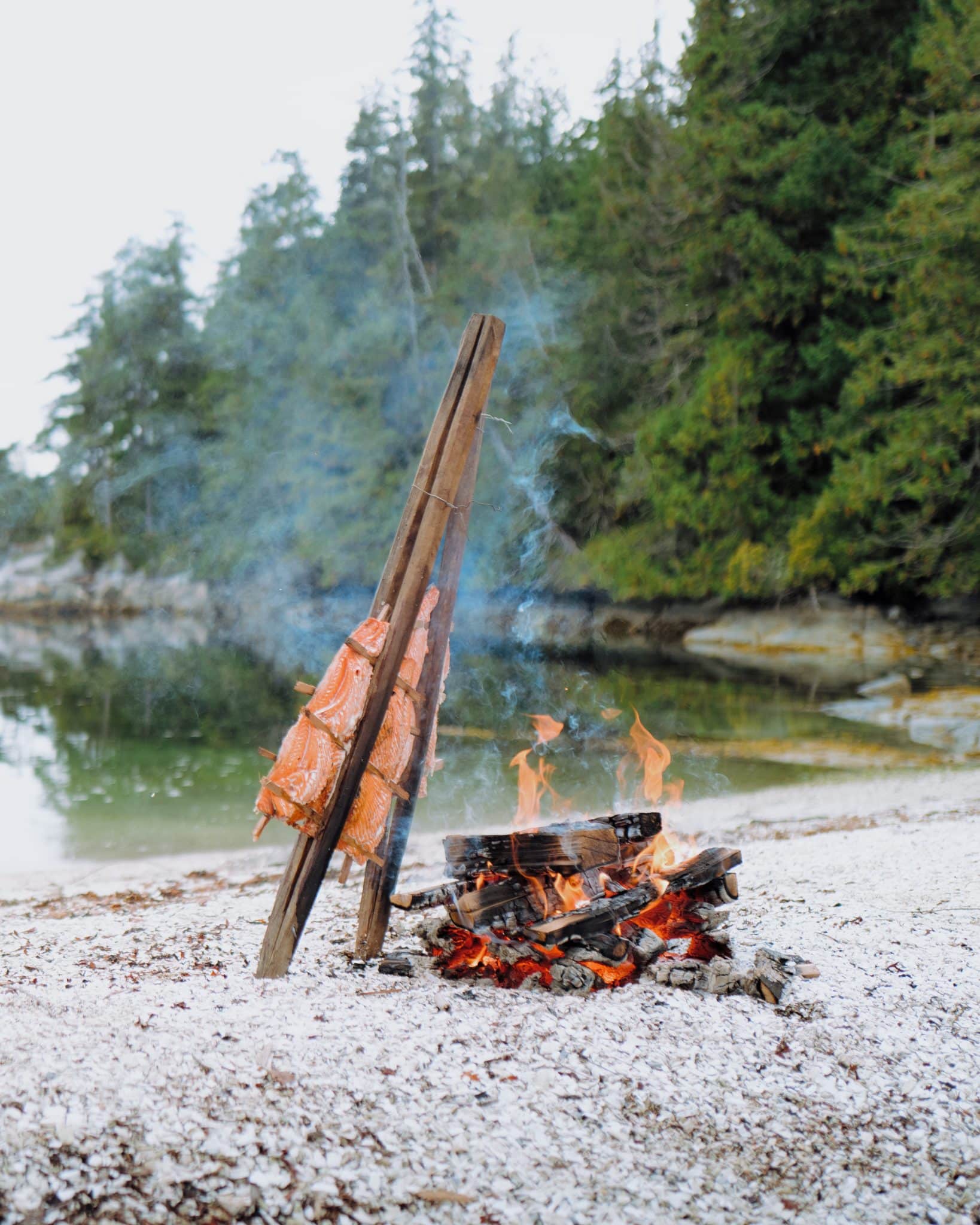
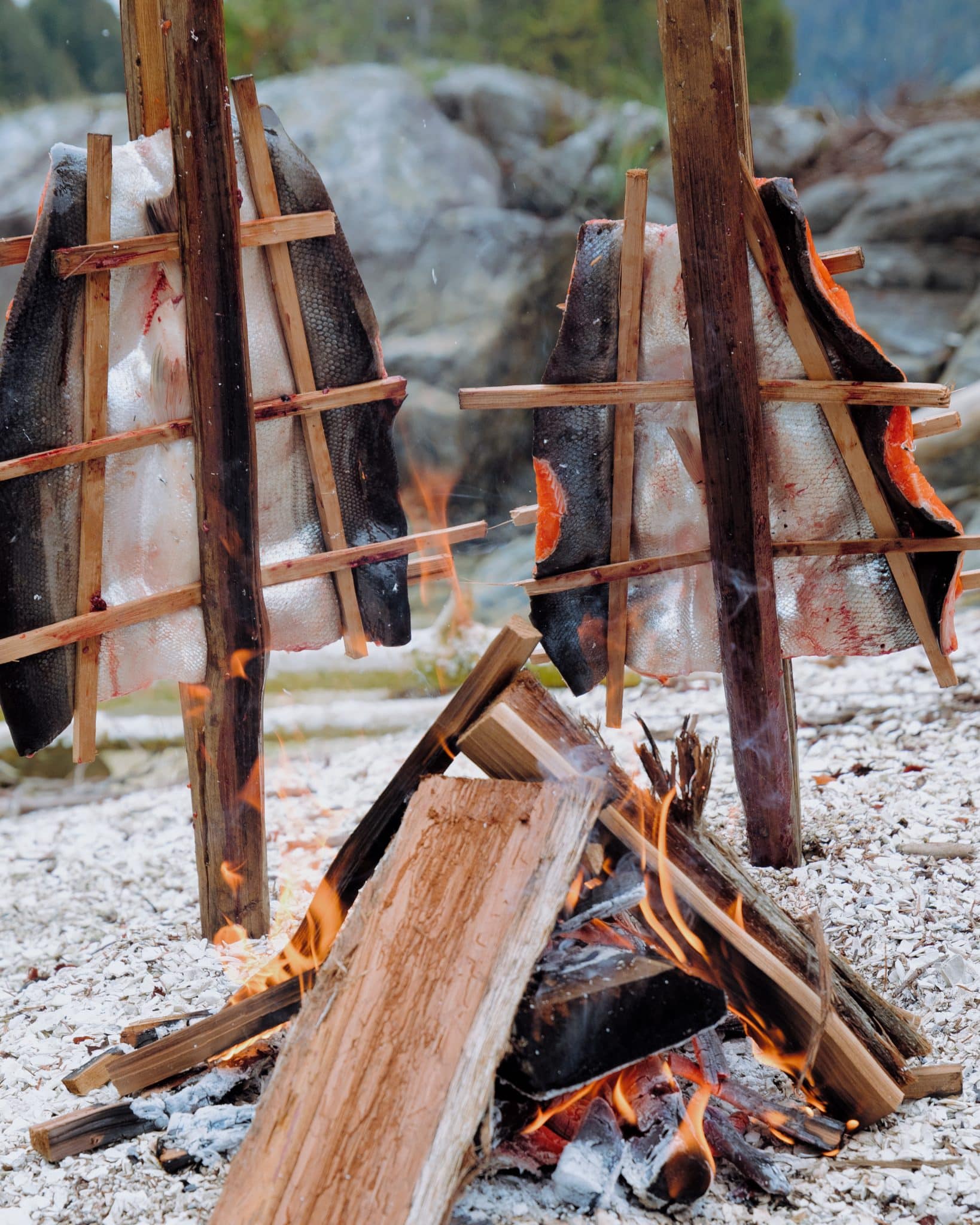
They knew when the salmon would come. They knew where they gathered. They understood the rhythms so completely that they built their entire culture around these migrations. The spring salmon, the summer salmon, the fall sockeye. Each arrival was expected, prepared for, honored. The fish were not taken greedily. There were protocols. There were ceremonies. There was reciprocity. You took what was needed. You gave thanks. You returned the carcasses to the water so the cycle could continue.
This knowledge is written in the shell middens. The proportion of salmon bones, the species present, the seasons they appear. The archaeological evidence speaks clearly: this was no subsistence living. This was abundance managed with intelligence. This was a people who understood the First Nations salmon traditions with such precision that they could feed their communities, trade widely, and have time for art, ceremony, and governance. Pacific Northwest Indigenous culture did not emerge from scarcity. It emerged from mastery.
The Sacred Loop: Bridging Past and Present Through Indigenous Ecotourism
But here is the most important truth: this is not past tense. The sacred loop is not broken. It is paused. It is tested. But it is not gone.
The salmon still come. The clams still grow in the beaches. The herring still fill the waters in their season. The ecological cycles that sustained the Kwakwaka’wakw for thousands of years still turn. The Great Bear Rainforest still stands. The waters still sing.
What has changed is our relationship to these cycles. What has changed is the space we are allowed to occupy in them. But the knowledge remains. The spiritual understanding remains. The responsibility remains.
This is why Indigenous-led sustainable tourism matters. This is why Indigenous ecotourism experiences in the Great Bear Rainforest are not just commercial ventures. They are acts of restoration. They are the reclaiming of our role as knowledge keepers and educators. When you book a tour with us, you are not consuming a product. You are stepping into a relationship with thousands of years of living knowledge.
When we speak of sustainable Indigenous tourism today, we are often speaking as though it is a new invention. But our ancestors understood it completely. They understood that you cannot take more than the rivers can give. They understood that the health of the salmon determines your health. They understood that you are not separate from nature. You are part of the cycle. This understanding is embedded in every protocol, every ceremony, every moment we spend on these waters.
Aboriginal Ecotourism in the Great Bear Rainforest: Reviving Ancient Knowledge
Indigenous tourism in British Columbia is experiencing a renaissance. More people are seeking authentic Indigenous-led experiences, yearning to connect with land, culture, and knowledge systems that modern life has disconnected them from. The Great Bear Rainforest Indigenous tours offered by communities like the Kwakwaka’wakw are not selling views. They are inviting you into a living knowledge system.
When visitors join our tours, they learn about the archaeological evidence that proves the sophistication of Kwakwaka’wakw knowledge systems. They encounter stories that connect human society to the landscape and ecological cycles. They witness a living culture that understands itself as part of, not separate from, the natural world. This is what sustainable Indigenous tourism looks like: respect, reciprocity, and the transmission of knowledge to the next generation.
Aboriginal ecotourism in the Pacific Northwest is increasingly recognized as a vital model for cultural preservation and economic vitality. When First Nations communities control their own tourism narrative, they can ensure that visitors understand the depth of Indigenous knowledge systems rather than treating them as exotic curiosities. This is the difference between tourism done to Indigenous people and tourism led by Indigenous people.
The Sacred Loop Continues: A Living Connection
When we gather today in Kwakwaka’wakw territory, we are standing where our ancestors stood. We are looking at the same waters, the same mountains, the same cycles. The shell middens beneath our feet are not distant history. They are foundation. They are proof of possibility. They are invitation.
The salmon that return today are the same species that fed our people for millennia. The beaches that hold the shells are still rich with life. The reciprocal relationship between the Kwakwaka’wakw people and the land is not erased. It is remembered. It is being reclaimed. It is being taught to visitors who come from across the world, hungry for connection to something real, something rooted, something that works.
This is the work of our time: to understand the sacred loop again. To live as though we are part of something larger than ourselves. To know that when we protect the salmon, we protect ourselves. When we honor the shells, we honor the hands that gathered them. When we walk these shores, we walk in the presence of thousands of years of our own people. The past is not behind us. It is beneath us. It is in the water that surrounds us. It is in the knowledge that still lives in our families and is now being shared with visitors through Indigenous-led sustainable tourism experiences.
The Pacific Northwest Indigenous culture did not disappear. It transformed. It adapted. It remains. And it is stronger when it is shared with those who come with respect.
Come and Learn
Come to Kwakwaka’wakw territory to learn from knowledge systems that have sustained a people for thousands of years. Learn how abundance is built through understanding. Learn what reciprocity with the land actually means. Learn from a culture that knows how to live well in one of the world’s most magnificent places.
Sea Wolf Adventures offers an education in sustainable living, in ecological knowledge, and in the intellectual and spiritual sophistication of Indigenous cultures. This is not a spectacle. This is a classroom on the water. Book your journey of learning today.