

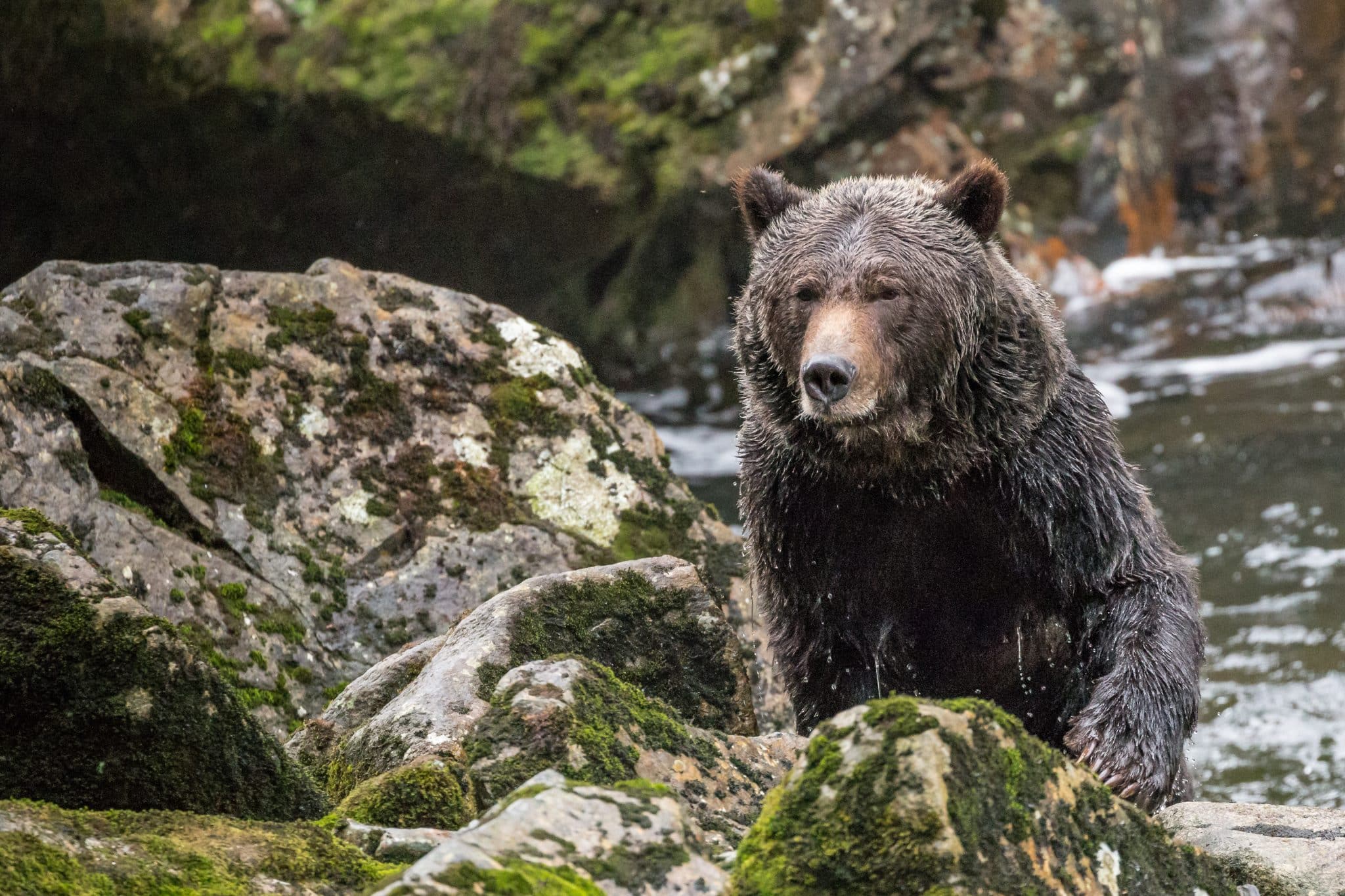
The area we operate in spans the central coast of British Columbia , a region the outside world calls the Great Bear Rainforest. That name was given without the full participation of the nations who have lived here since time immemorial. The Musg̱a̱makw Dzawada̱’enux̱w were not at the table when that framework was created. What we know is this: the G̱a̱la , the grizzly bear , has thrived in this territory for as long as our people have been here. At Sea Wolf Adventures, we offer ethical grizzly bear viewing experiences rooted in Kwakwa̱ka̱’wakw knowledge and stewardship practices. Our approach is guided by generations of understanding how to coexist respectfully with this powerful species (Ursus arctos horribilis).
Grizzly bears are not spectacles to be pursued. They are neighbors,intelligent beings with seasonal patterns, family structures, and territorial ranges we must honor. When we bring guests into this territory, we’re answering a deeper responsibility: to observe without disrupting, to learn without exploiting, and to share what we know in ways that keep this relationship alive.
## What Makes Grizzly Bear Viewing Ethical?
Ethical grizzly bear viewing means maintaining distance, reading bear behavior, and understanding when presence becomes intrusion. In the Great Bear Rainforest, this isn’t a new concept. The Musg̱a̱makw Dzawada̱’enux̱w, the four tribes of the Kingcome River, have coexisted with grizzly bears in this territory for millennia using principles that prioritize the land and its inhabitants first.
What this looks like in practice:
- Maintaining safe distances that allow bears natural behavior without stress or awareness of human presence
- Seasonal timing that respects breeding, feeding, and hibernation cycles
- Small group sizes that reduce environmental impact
- Guide expertise in bear behavior and safety protocols rooted in generations of Kwakwa̱ka̱’wakw knowledge
- Long-term conservation commitment beyond individual tours
We operate with the understanding that we must give more than we take. Every tour strengthens the case for protection over exploitation, and demonstrates that a living, intact ecosystem is worth more than any extracted resource.
## The Great Bear Rainforest: A Grizzly Bear Sanctuary
The Great Bear Rainforest encompasses roughly 6.4 million hectares of coastal temperate rainforest. This ecosystem is critical habitat for grizzly bears, particularly in river valleys where salmon runs fuel their seasonal abundance. this territory and Knight Inlet are two of the most significant viewing regions, where spawning salmon create natural gathering points.
Grizzly bears in the Great Bear Rainforest experience distinct seasonal patterns. From late spring through early summer, bears emerge from winter dens and move toward coastal rivers. Late summer through fall represents the peak salmon season,when bears congregate most visibly along streams and estuaries. This timing matters because it allows us to observe natural behavior without the stress of human pursuit during denning or vulnerable periods.
The landscape itself,old-growth cedar, hemlock, and spruce forests interwoven with river systems,creates both the abundance bears need and the natural viewing corridors we depend on. We move through the territory with that in mind. We move through the rainforest as guests, not operators.
## Why Indigenous Leadership Matters in Ethical Grizzly Bear Viewing
Grizzly bear viewing in this territory cannot be separated from Indigenous stewardship. For millennia, Kwakwa̱ka̱’wakw peoples have observed and managed wildlife populations using detailed ecological knowledge encoded in story, law, and seasonal practice.
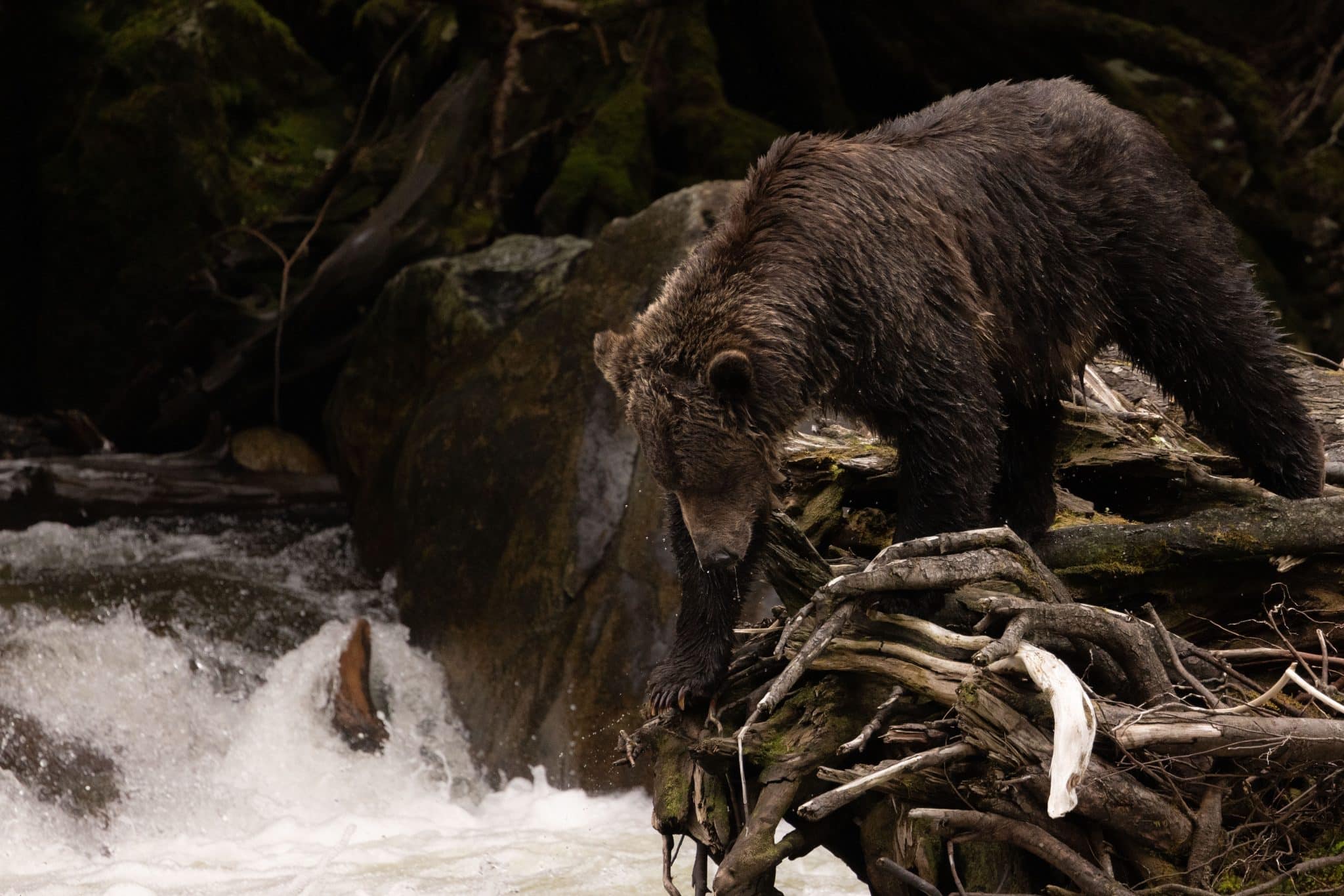
Mike Willie, a leader of the Musg̱a̱makw Dzawada̱’enux̱w nation, founded Sea Wolf Adventures on this foundation. Our approach reflects principles that predate Western conservation frameworks by thousands of years: the idea that humans are part of ecosystems, not managers of them; that observation builds relationship, not dominion; and that responsibility to the land is inseparable from responsibility to wildlife.
When you come out on the water with us, you’re learning from guides who carry generations of Kwakwa̱ka̱’wakw knowledge about these animals and this territory.nd forest ecology.
## Seasonal Timing for Ethical Grizzly Bear Viewing
We follow the bears’ calendar, not a tourism schedule. Understanding these seasonal patterns is fundamental to responsible viewing.
## Spring: Emergence and Early Feeding
From May onward, grizzly bears are active and highly visible along the shoreline. These bears have learned to turn rocks at low tide to find the protein-rich invertebrates underneath , crabs, clams, and other marine life. Spring is excellent viewing. The bears move methodically along the water’s edge, fully focused on feeding, and can be observed at length from the boat. There is nothing limited about what guests witness.
## Summer: Salmon Season Begins
Early to mid-summer brings the first salmon runs to Great Bear Rainforest rivers. Bears begin moving toward traditional fishing sites. Bears gather predictably along streams but remain focused on feeding rather than human activity.
## Late Summer and Fall: Salmon Season
From late summer through early autumn, salmon abundance reaches its peak. Grizzly bears congregate in river valleys,particularly in areas like this territory,where they can feed efficiently on spawning salmon. This natural abundance means bears are visible, focused, and undisturbed when groups move quietly and maintain proper distance.
Late summer and fall are when the salmon are running and the bears are most active; natural food abundance keeps bears in valleys and away from human settlements, and because their feeding behavior is predictable and observable from safe, designated positions.
## Coming Prepared
We ask that guests come prepared. We ask that all guests arrive ready to follow guide direction, maintain quiet on approaches, and respect safety protocols designed to keep both bears and humans secure.
Physical fitness matters. The safari involves hiking through varied terrain, often in wet conditions. Stamina and surefootedness protect both you and the bears by allowing us to move efficiently and minimize disturbance.
Attitude matters most. This is a privilege, not a right. Bears do not owe us their presence. When we encounter them, we’re entering their space. This mindset,one of gratitude and humility,transforms the experience from sightseeing into genuine encounter.
## Why It Matters
When you choose to come out with Sea Wolf Adventures, you’re voting with your presence for a model of wildlife tourism that prioritizes protection over extraction. You’re supporting Indigenous-led conservation. You’re funding research that strengthens protection for this ecosystem.
The grizzly bear population of the Great Bear Rainforest remains vulnerable. Habitat loss, climate change, and unregulated fishing practices threaten salmon runs that bears depend on. Choosing to spend your time and money here actively counters these threats by demonstrating the economic and ecological value of bears alive and thriving.
Each visitor who comes out with us becomes an ambassador for protection. You return home with knowledge and stories that shift how people understand this species and this place. That ripple effect,multiplied across every person who chooses ethical viewing,creates the political and cultural foundation for long-term protection of this territory.
## Come Out on the Water
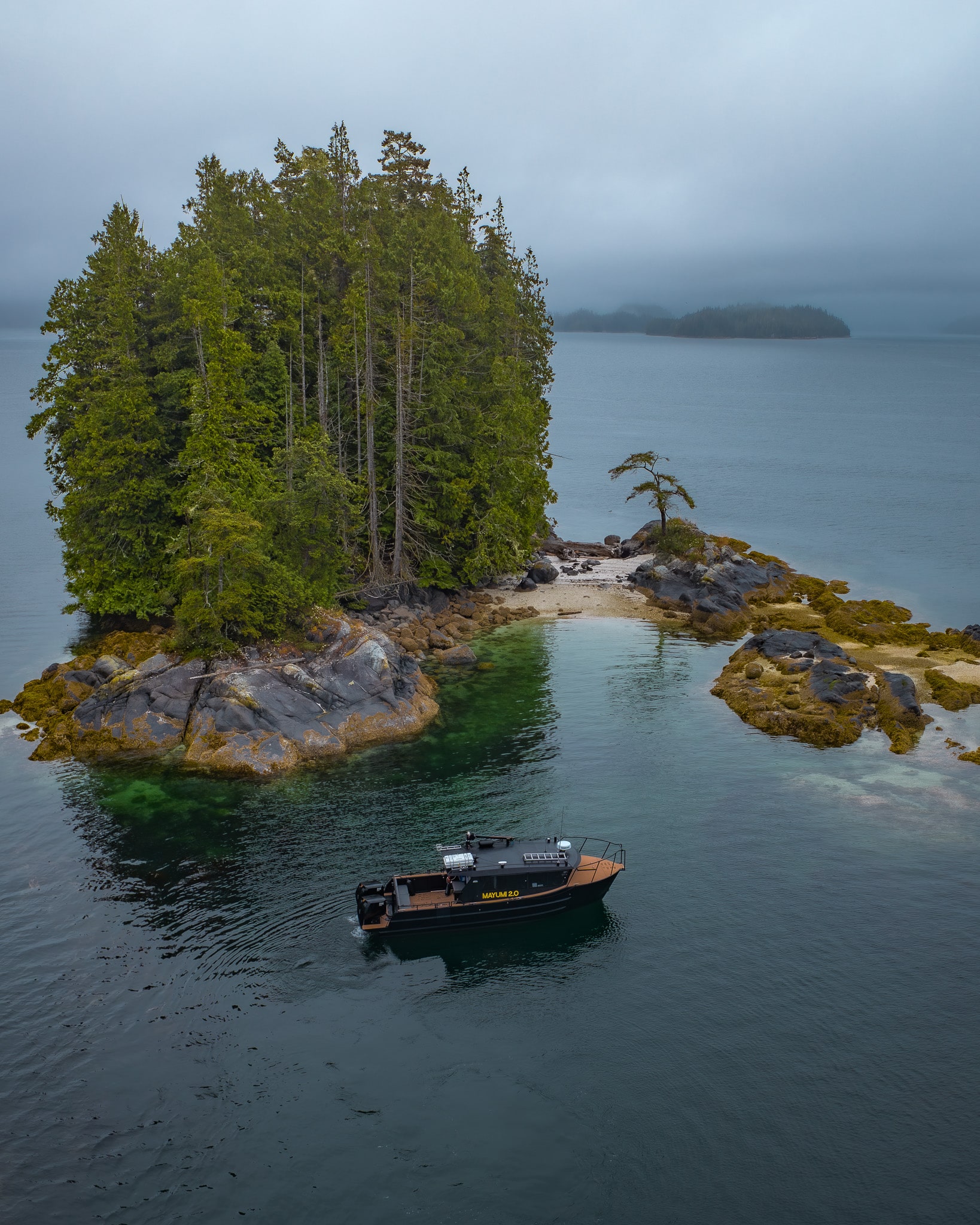
The Great Bear Rainforest is one of the world’s most intact temperate rainforests. The grizzly bears here represent not just a species, but a living connection to thousands of years of Kwakwa̱ka̱’wakw stewardship and knowledge. This experience offers you a chance to step into that relationship,to learn from guides trained in both science and tradition, to observe one of Earth’s most powerful beings in its home, and to contribute to conservation that spans generations.
When you’re ready, we’re here to guide you with knowledge, respect, and commitment to the bears and the land they depend on.